
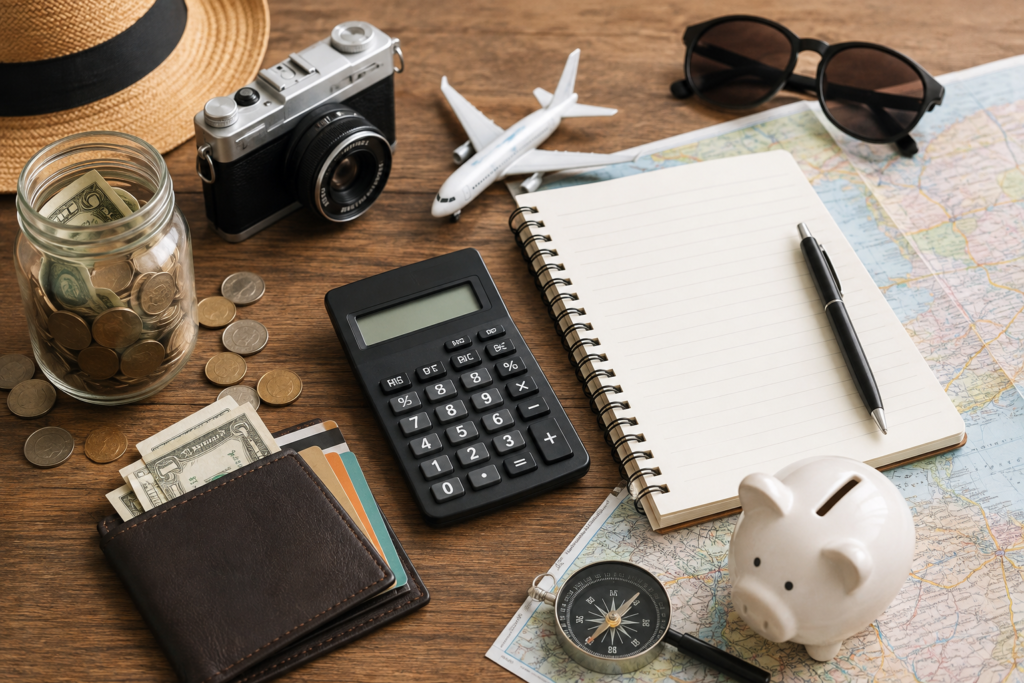
Everyone loves to travel, but simply choosing a beautiful destination isn’t enough; creating a travel budget is equally important. Having a budget ensures you won’t have to worry about unexpected expenses later on
1. Decide Your Total Travel Budget
Make sure to keep in mind what your first step should be before traveling
Add these items to balance your expenses
- Transportation
- Accommodation
- Food which you like
- all Local transport
- Sightseeing and activities
- Shopping
- Emergency expenses
For example, if your total budget is 40,000, you should know how to manage it
2. Calculate Your Transportation Costs
Since transportation makes up a significant part of your trip, check various websites before booking — whether for flights, trains, buses, or cars. Also, keep in mind additional costs like baggage fees, fuel, tolls, and parking. Crucially, make sure to plan everything with the timing and season in mind
Set an Accommodation Budget
Accommodation expenses make up a significant part of your travel costs, so you should plan ahead to ensure the hotel fits your budget and offers the best value for money.
For example — ₹2,200 per night × 4 nights = ₹8,800
When selecting a hotel, pay special attention to factors such as the location, customer reviews, and services; ideally, the hotel should be situated close to the main street or key sightseeing attractions.
4. Estimate Your Food Budget
When traveling, important food items to include in your budget are breakfast, lunch, dinner, evening snacks, and drinks (such as mocktails and cocktails)
If your daily food budget is ₹1,000 and your trip lasts five days, you can keep approximately ₹5,000 for food
Try eating at local, affordable restaurants; this helps keep your budget in check and satisfies your taste buds while allowing you to avoid overeating.
5. Include Local Transport and Sightseeing
Many travellers calculate the cost of reaching their destination but forget about getting around once they arrive
Include expenses for-
- Taxis and auto-rickshaws
- Metro and buses
- Rental cars or bikes
- Parking
- Tourist attraction tickets
- Guided tours
- Activities
Research these trip expenses before leaving. Create separate lists for must-visit and optional attractions so that essential experiences get priority.
Sample Travel Budget for a 5-Day Trip
Here is a simple example of how you can divide a ₹40,000 travel budget:
Expense Category Estimated Budget Money-Saving Tip Transportation₹10,000 Compare different travel options Accommodation₹11,000 Compare hotels and locationsFood₹5,000 Try trusted local restaurants Local Transport₹3,500Use public transport when practical Sightseeing ₹3,500 Include free attractions Shopping₹4,000Set a fixed spending limit Emergency Fund₹1,000 Keep this money separate
6. Set a Shopping Budget
Shopping for souvenirs, clothes, gifts, and local products is enjoyable, but it can quickly increase your travel costs.
Set a shopping limit before your journey. Once you reach that amount, avoid unnecessary purchases. This prevents shopping expenses from affecting your budget for food, transport, or activities.
7. Keep an Emergency Fund
Unexpected situations can happen on any trip. Keep some extra money for emergencies such as transportation changes, medical needs, additional baggage charges, or unexpected accommodation expenses.
Keep your emergency fund separate and avoid using it for normal shopping or entertainment.
Travel Smart: Spend Wisely, Not Less
Remember, budget travel isn’t about choosing the cheapest option every time. It’s about spending wisely on things that are important to your journey.

conclusion
Learning how to make a travel budget before your trip can make travelling more organised and financially manageable. Start by deciding your total budget and estimating transportation, accommodation, food, local travel, sightseeing, shopping, and emergency expenses.
Follow practical budget travel tips, compare prices before booking, and track your daily spending. With proper travel budget planning, you can reduce unnecessary expenses and focus more on enjoying your journey.
A smart travel budget gives you more control over your money and helps you create